Importing Candy to the EU: A Wholesale Buyer's Practical Guide
Importing confectionery into the European Union involves clear rules on food safety, labelling, and traceability. Wholesale buyers — whether distributors, retail headquarters, or specialist importers — need suppliers who provide complete documentation and products formulated for EU compliance from the start. This guide outlines what matters most when importing candy to the EU, and how Candora Trading supports structured wholesale programmes.
EU Food Law Basics for Confectionery
Confectionery sold in the EU must comply with the General Food Law and relevant vertical standards on food additives, contaminants, and labelling. Importers need to verify that their supplier operates under recognised food safety management (such as FSSC 22000, BRCGS, or IFS) and can provide specifications, certificates, and traceability on request.
Labelling and Allergens
EU Regulation 1169/2011 requires clear ingredient lists, allergen emphasis, nutrition declaration where mandatory, and correct language for the market of sale. Jelly and sour products often contain gelatine, sulphites, or gluten from glucose sources — accurate declaration is critical. Candora Trading works with factories that supply EU-ready specifications to support your regulatory review.

Customs, VAT, and Commercial Flow
Post-import VAT and customs processes depend on your incoterms, whether you use a fiscal representative, and the role of your logistics partner. While Candora Trading does not provide legal or tax advice, we coordinate commercial invoicing and product data so your customs broker can clear shipments efficiently.
Next Steps With Candora Trading
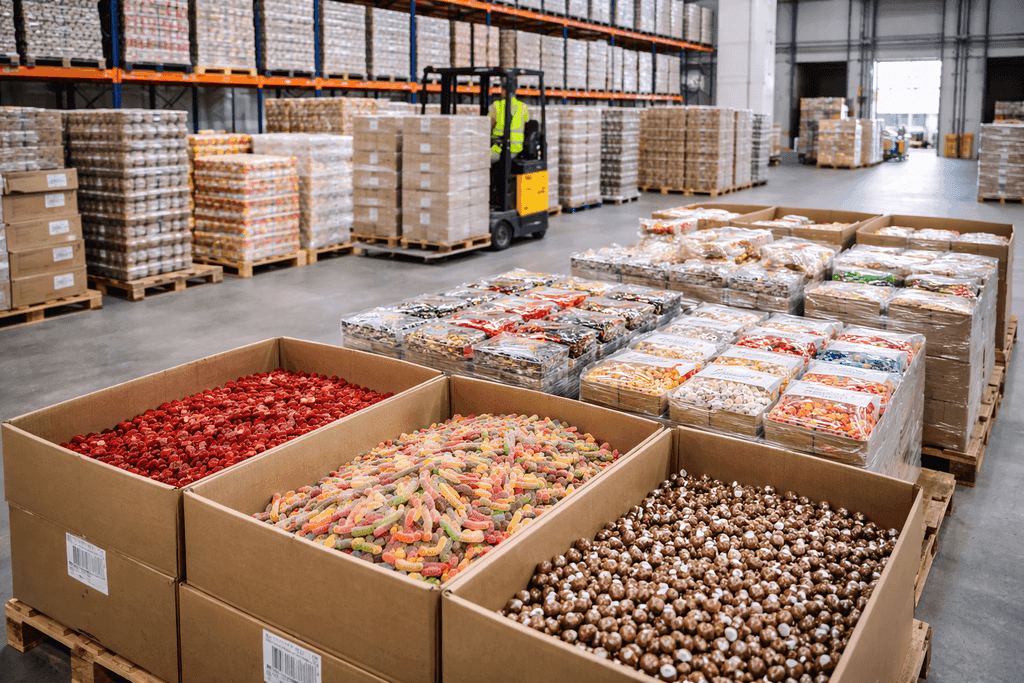
If you are building or scaling EU import of jelly and sour confectionery, contact us with your destination countries, channel, and volume. We will propose SKUs, MOQs, and documentation timelines aligned to your registration and listing process.
FAQ
Frequently asked questions
Not necessarily — structures vary. Many buyers import through an EU-established importer of record. Your legal and tax advisers should confirm the right setup for your business.
Yes. We supply factory specifications, allergen statements, and certificates as required for your QA and regulatory workflows.
Typical production and sea freight schedules mean 8–14 weeks door-to-door depending on destination and factory slot — express air is faster but costlier. We provide timelines at quotation.
Organic lines are subject to factory certification and SKU-specific approval. Ask us for current organic-capable production if that is a listing requirement.
Ready to get started?
Contact our team to discuss volumes, pricing, and supply structures for your market.