Candy Wholesale Margins: The Complete Profitability Guide for Retail Buyers
Margin performance is the single most important metric for category managers and retail buyers sourcing confectionery wholesale. The difference between sourcing conventional branded candy and strategic alternatives—private label, direct factory supply, or format optimization—can determine whether a confectionery programme delivers 15% net profit or 25%+. This guide covers the margin dynamics across confectionery formats, wholesale supply models, and strategic optimisations that high-performing retail chains use to build profitable candy categories.
The Confectionery Margin Landscape in 2026
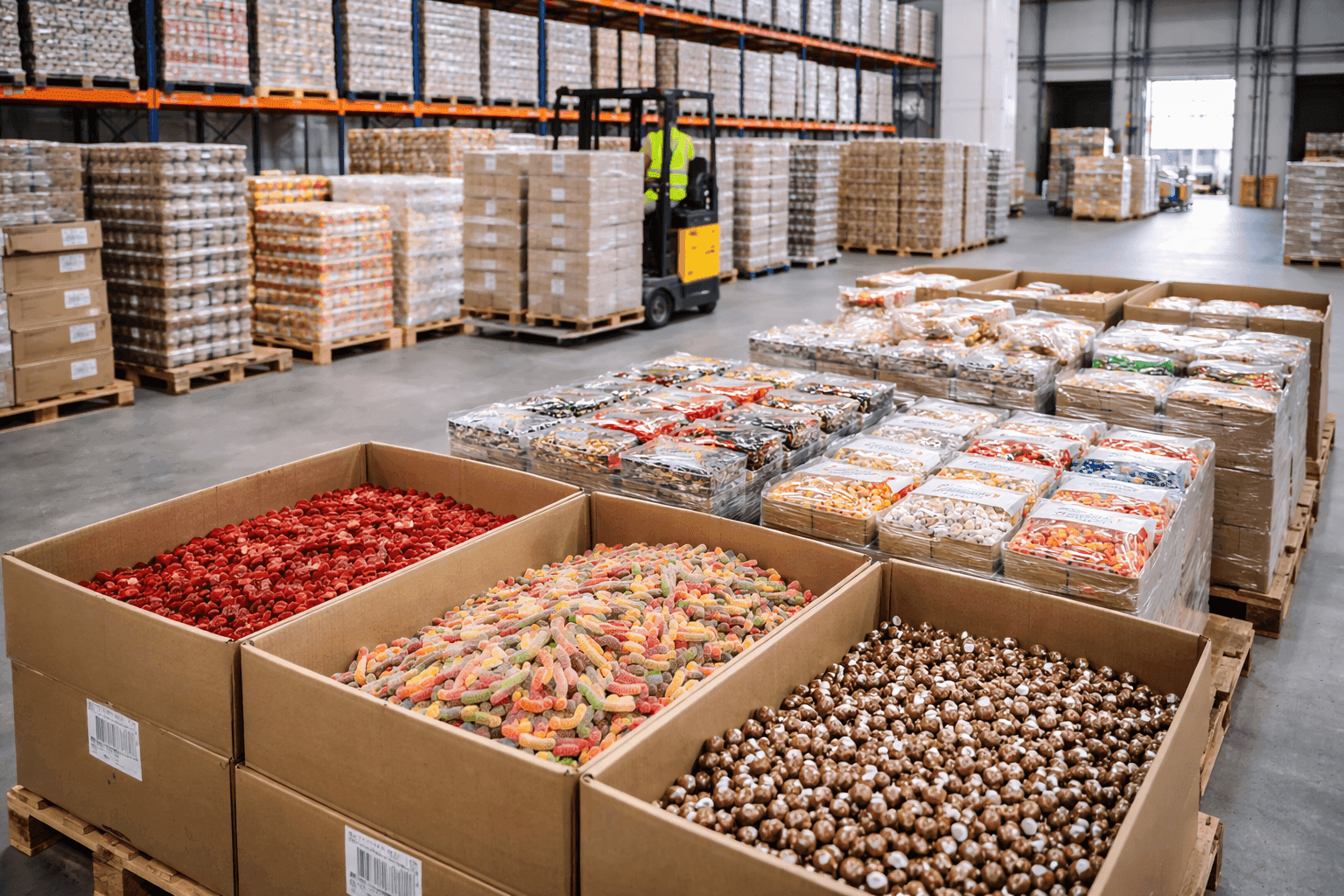
Confectionery retail margins vary dramatically based on product category, sourcing model, and retail format. Industry data from 2026 shows that candy stores operating at $10,000 monthly revenue typically achieve 10–15% net profit margins due to fixed cost burdens. However, stores scaling to $25,000+ monthly revenue in the same category achieve 20–25% net margins through economies of scale and optimised sourcing. The difference is not incremental cost reduction—it's structural sourcing strategy. Bulk candy offers the highest gross profit potential at 60–75% gross margins. Packaged chocolate maintains steady 45–50% margins. Novelty and gift items achieve 50–65% margins. Beverages and snacks—typically lower-margin impulse categories—yield 35–45% margins. For retail chains and distributors, understanding these baseline margins is the foundation for wholesale negotiation and supply programme design.
Private Label vs Branded: The Margin Multiplier
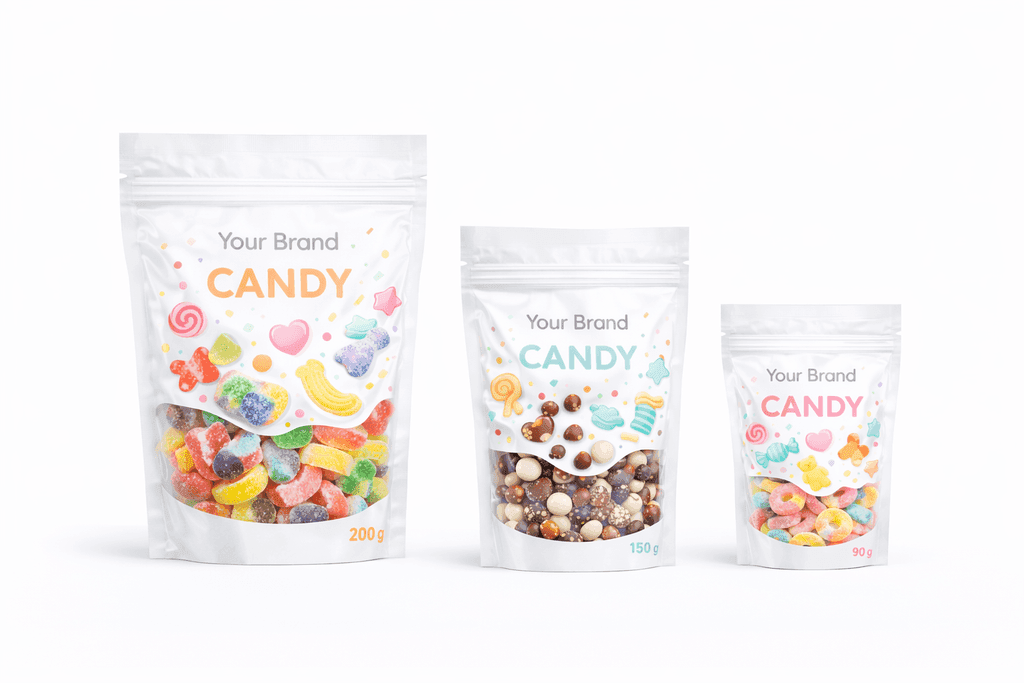
The single largest margin opportunity in confectionery is private label sourcing. Industry analysis shows that private label confectionery consistently delivers 30–40% margin uplift compared to branded equivalents at the same retail price point. Here's how the math works: A branded jelly bear might cost you €3.50/kg wholesale and retail at €8.99/kg, delivering a gross margin of 61%. A private label equivalent from Candora Trading might cost €2.80/kg wholesale—sourced directly from the factory without intermediary markup—while retailing at the same €8.99/kg price, delivering a gross margin of 69%. Over a year, if a 15-metre pick & mix fixture moves 50 tonnes of jelly products, the private label approach generates €4,950 additional gross profit on that SKU alone. Scale this across a full confectionery assortment (10–15 major formats) and private label sourcing can drive €50,000–€100,000 annual margin uplift for a single retail location. Retailers with 20–50 store locations using private label programmes report 8–12% category margin improvement year-on-year.

Direct Factory Sourcing: Eliminating Margin Leakage
Most retail confectionery sourcing flows through multiple intermediaries: manufacturer → distributor → wholesaler → retailer. Each intermediary layer adds 15–25% margin. By sourcing directly from factories—either independently or through a specialist supplier like Candora Trading with established factory relationships—retailers bypass 2–3 intermediary margins. At container volumes (20ft/40ft FCL), direct factory sourcing reduces COGS by 20–35% compared to traditional wholesale channels. A retailer moving 100 tonnes annually can realise €30,000–€50,000 COGS savings through direct sourcing, with minimal additional complexity. The trade-off is volume commitment (typically 15+ tonnes annually) and slightly longer lead times (4–8 weeks). For retailers operating 10+ locations or distributors serving multiple customers, this trade-off is overwhelmingly favourable.
Format-Specific Margin Performance
Different confectionery formats deliver significantly different margin profiles: **Jelly Candy & Gummies (Highest Velocity):** Jelly bears, sour worms, and foam shapes typically achieve the highest retail sell-through rates. Per-unit margins are moderate (45–55% at retail), but velocity—especially in pick & mix installations—drives absolute profit contribution. A high-velocity jelly SKU selling 5 tonnes monthly can outprofit a novelty format selling 200kg monthly, despite lower per-unit margin. **Sour Candy (Premium Margin):** Sour belts, sour worms, and coated formats command higher retail price points and achieve 55–65% gross margins. These formats face less price competition than classic jelly, allowing retailers to maintain margin even in competitive markets. **Pick & Mix (Highest Absolute Margin):** Loose confectionery in pick & mix installations achieve 65–75% gross margins—the highest category margins available. The self-selection format and premium positioning justify price-per-gram significantly above bagged equivalents. **Novelty & Specialty (Variable):** Shaped formats, sour-coated variants, and seasonal specialties (Christmas candy, Halloween themes) achieve 50–70% margins depending on positioning and competition. For category managers: focus sourcing investments on the formats delivering highest velocity × margin contribution, not absolute gross margin percentage.
Margin Optimisation Across Retail Formats
Margin performance varies dramatically by retail channel: **Grocery & Supermarket Chains:** Typically operate on lower unit margins (40–50%) due to volume and competitive intensity, but absolute profit contribution per location can be significant due to traffic and basket value. Private label confectionery is essential to margin maintenance. **Convenience & Quick Commerce:** Impulse confectionery is a high-frequency, high-margin category in convenience retail. Retailers report 20–30% category margin uplift from proper product placement, format curation, and private label assortments. Sour and foam formats drive strongest performance. **Discount Retail:** Operators margin on value perception rather than absolute price. Private label confectionery—especially bulk and mixed formats—is crucial to maintaining margin while meeting customer price expectations. **Online & E-commerce:** Delivery economics pressure margins, but pick & mix pre-packed bags and subscription box formats command premium positioning, achieving higher per-unit margins than in-store equivalents. **Specialist Confectionery Retail:** Highest margins available (60–80% gross), but require careful format curation and consistent stock rotation.
Volume Economics: How Scale Unlocks Margin
Margin improvement is not linear with volume—there are structural breakpoints where margin efficiency improves dramatically. **Small Retailers (Annual Confectionery Volume: 5–15 tonnes):** Operating costs and sourcing inefficiency compress margins to 10–15% net. These retailers typically source through distributors, paying full intermediary markup. **Regional Players (15–50 tonnes annually):** Can access pallet-quantity pricing and begin private label programmes. Typical net margins: 15–20%. **National Chains (50–200+ tonnes annually):** Access container pricing, direct factory relationships, and full private label capability. Typical net margins: 20–25%+. **Multi-National Operators (200+ tonnes annually):** Can consolidate across multiple categories and geographies, negotiate custom production, and achieve 25–30%+ net margins. The jump from distributor sourcing (small retailer) to container sourcing (regional player) typically delivers 3–5% margin improvement. This is why Candora Trading structures programmes around 15-tonne minimums—it's the inflection point where direct sourcing becomes economically viable.
Practical Margin Optimisation Strategies
**1. Audit Your Current Source Mix** Determine what percentage of your confectionery volume comes from branded vs private label, distributor vs direct factory, and bulk vs packaged formats. Identify the lowest-margin SKUs—often these are distributor-sourced branded items competing directly with private label alternatives. **2. Implement Private Label on High-Velocity SKUs First** Don't launch a full private label programme simultaneously. Start with your top 3–5 velocity SKUs (jelly bears, sour belts, mixed assortments). Move volume, build operational relationships, then expand. **3. Shift to Direct Sourcing at Container Volumes** If you're currently sourcing containers through distributors, identify 2–3 product categories and approach the factory directly (or through Candora Trading). The 20–35% COGS reduction justifies the modest logistical change. **4. Optimise Format Mix by Margin Contribution** Calculate profit contribution (not just margin %) for each SKU. A lower-margin high-velocity format often outcontributes a higher-margin slow-moving format. Planogram allocation should prioritise absolute margin contribution. **5. Leverage Seasonal & Trending Formats** Seasonal candy (Christmas, Easter, Halloween) and trending formats (energy gummies, organic options) command 10–20% margin premium. Allocate shelf space and buying budget proportional to seasonal margin potential. **6. Build Recurring Supply Agreements** Monthly or quarterly recurring supply agreements typically deliver 5–10% pricing discount vs spot purchases, improving landed margin without retail price reduction.
Margin Benchmarking: How Do You Compare?
Use these benchmarks to assess your current confectionery margin performance: **Gross Margin Benchmarks (by retail channel):** - Grocery & Supermarket: 40–50% gross - Convenience & Quick Commerce: 50–65% gross - Specialist Confectionery: 60–75% gross - Online/E-commerce: 45–60% gross - Discount Retail: 35–50% gross **Net Profit Margin Benchmarks (by store size & sourcing model):** - Distributor-sourced (small): 10–15% net - Mixed sourcing (regional): 15–20% net - Direct factory + private label: 20–30% net If your margins are below these benchmarks, the opportunity is likely in sourcing model change (distributor → direct factory, branded → private label) rather than retail pricing adjustment.
Working With a Wholesale Partner to Improve Margins
The most efficient path to margin improvement is partnering with a wholesale supplier who offers direct factory relationships, private label capability, and container-scale economics. Candora Trading specialises in exactly this: we eliminate intermediary costs, structure private label programmes, and guarantee transparent landed costs. When evaluating a confectionery wholesale partner, assess: - Do they offer direct factory pricing or markup intermediary pricing? - Can they support private label programmes at your volume level? - What are their MOQ requirements and lead times? - Do they provide transparent COGS visibility throughout the supply chain? - Can they support recurring supply agreements with volume discounts? A strong wholesale partnership can deliver 5–15% margin improvement without any retail pricing change—pure supply-side optimisation.
Competitive Pressure & Margin Defense Strategies
As confectionery becomes increasingly competitive (discount retailers, online players, private label proliferation), margins are under constant pressure. Retailers who don't actively optimise margins will see them erode 1–3% annually. **Margin Defense Tactics:** **1. Segment by Margin Tier:** Not all SKUs deserve equal shelf space. High-margin formats (sour, pick & mix, premium specialty) deserve 60–70% of space allocation. Low-margin commodity formats should be minimized or eliminated. This forces margin discipline across the assortment. **2. Use Category Captaincy Data:** Many large retailers partner with suppliers to use advanced category management data (market basket analysis, customer price sensitivity, promotional elasticity). This data identifies which format changes improve category profit vs just volume. Leverage this to defend margins. **3. Develop Store-Specific Assortments:** Not all stores should have identical assortments. High-income locations support premium pricing and margin (sour, specialty, organic). Value-conscious locations require more aggressive pricing (jelly, bulk, standard formats). Store-level optimization captures margin without losing volume. **4. Build Exclusive Private Label:** If you have exclusive private label formats competitors can't source, you eliminate direct price comparison. This is the most effective margin defense. Customers can't compare your private label to a branded equivalent at another retailer. **5. Monitor Competitive Pricing Weekly:** Set up pricing intelligence (mystery shop, competitor data services) to track when competitors discount. This lets you respond strategically (hold margin, or tactical discount on high-velocity formats) rather than reactively following every price move.
Next Steps: Building Your Margin Optimisation Plan
Improving confectionery margins is a systematic process. Start by auditing your current sourcing and identifying the highest-impact opportunities: 1. Calculate current blended COGS across your confectionery assortment 2. Identify lowest-margin SKUs and highest-velocity formats 3. Model private label economics on 3–5 key SKUs 4. Evaluate direct factory sourcing at container volumes 5. Implement changes incrementally, starting with highest-impact formats Most retailers see 2–5% net margin improvement within 6–12 months of implementing these optimisations. Retailers willing to restructure around private label and direct sourcing see 8–15% margin improvement. **Timeline Expectation:** - Weeks 1–4: Audit current sourcing, identify top 5 optimization opportunities - Weeks 5–8: Model economics on 3–5 SKUs, source samples from alternative suppliers - Weeks 9–12: Test private label/direct sourcing pilots, measure margin impact - Months 4–6: Scale successful pilots, adjust assortment and pricing - Months 6–12: Full rollout, measure category-level margin improvement The key is starting with highest-impact opportunities (usually private label on top 3 velocity SKUs) and proving ROI before scaling. This builds internal credibility and funding for larger programme expansion.
FAQ
Frequently asked questions
It depends on scale and sourcing model. Small retailers (distributor-sourced) achieve 10–15% net margins. Regional players (15+ tonnes, mixed sourcing) achieve 15–20%. Large chains with private label and direct factory sourcing achieve 20–30%+ net margins. The difference is sourcing strategy, not retail pricing.
Private label sourcing typically delivers 30–40% gross margin uplift compared to branded equivalents at the same retail price. At annual volumes of 50+ tonnes per format, this translates to €30,000–€100,000+ annual margin improvement per location.
Yes, absolutely—at volumes of 15+ tonnes annually. Direct sourcing reduces COGS by 20–35% vs distributor channels, typically delivering €30,000–€50,000 annual savings for a multi-location retailer. The lead time trade-off (4–8 weeks) is manageable with forecast planning.
Pick & mix loose confectionery achieves the highest margins (65–75%). Sour-coated formats achieve 55–65%. Jelly and gummies achieve 45–55% but often deliver the highest absolute profit contribution due to velocity.
Compare your current COGS per kg against direct factory pricing. If you're paying more than 10–15% above factory pricing, you're losing money to intermediary markup. Request a quote from Candora Trading at 15+ tonne volumes to benchmark.
Ready to get started?
Contact our team to discuss volumes, pricing, and supply structures for your market.
Related
Explore more
Private Label
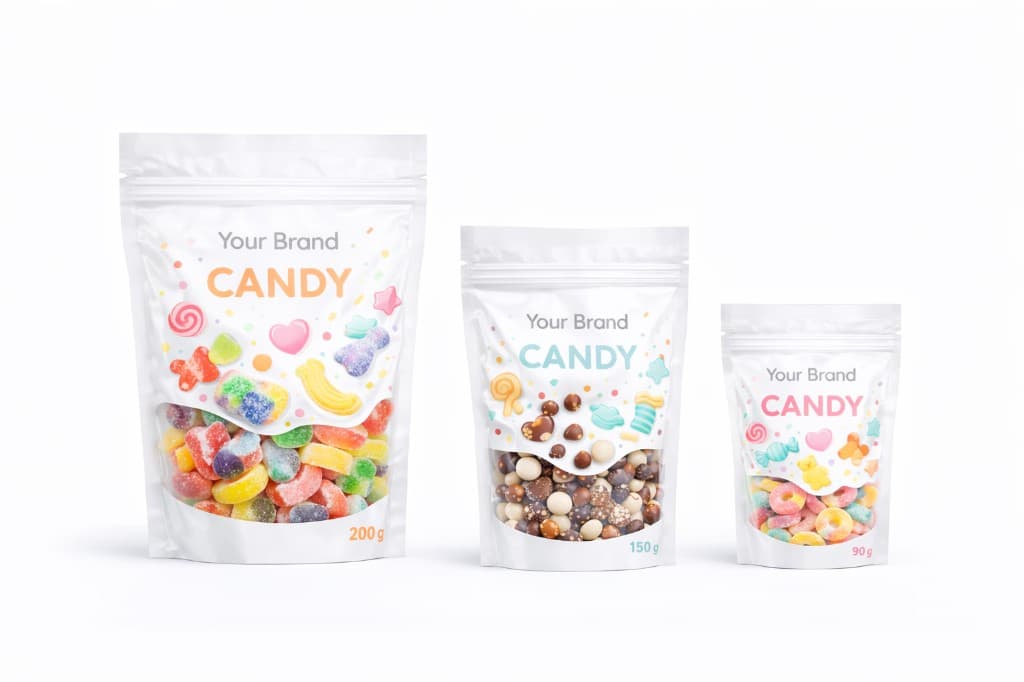
Private Label Candy: How Retailers Build Higher-Margin Confectionery Ranges
Bulk Supply
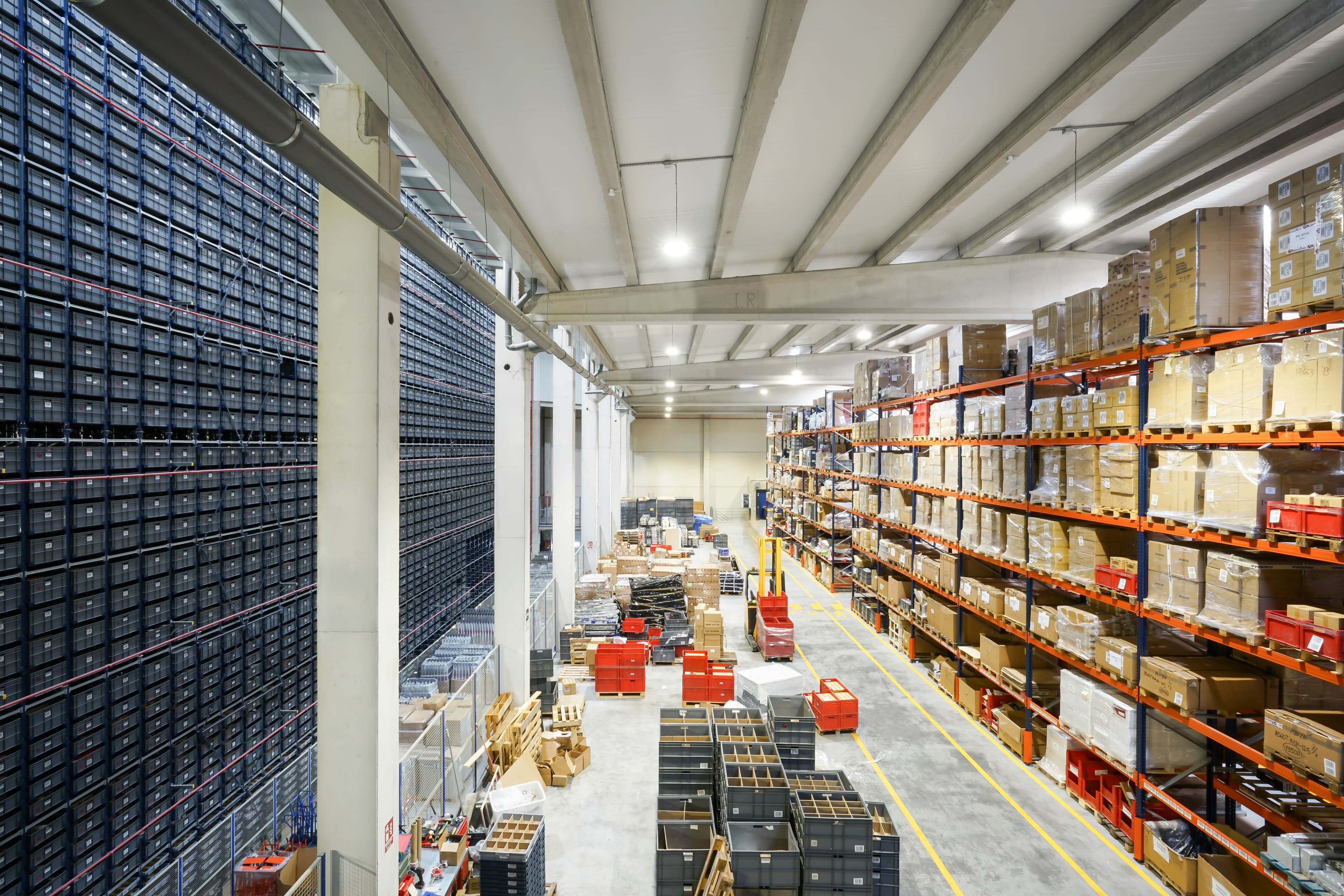
Bulk Candy Wholesale
Confectionery
Confectionery Wholesale
Private Label
Private Label Sour Candy: Capture the Fastest-Growing Confectionery Segment
Pick & Mix
Swedish Pick and Mix Wholesale: How to Source and Profit