How to Import Candy from Europe: A Complete Guide for Buyers and Distributors
European confectionery — particularly Swedish, German, Dutch, and Polish candy — is in growing demand across Asia, the Middle East, North America, and beyond. For buyers, importers, and distributors looking to add European candy to their range, understanding the supply chain, regulatory requirements, and commercial structures involved is essential. This guide covers everything you need to know about importing candy from Europe, from factory sourcing to shelf-ready delivery.
Why Import Candy from Europe?
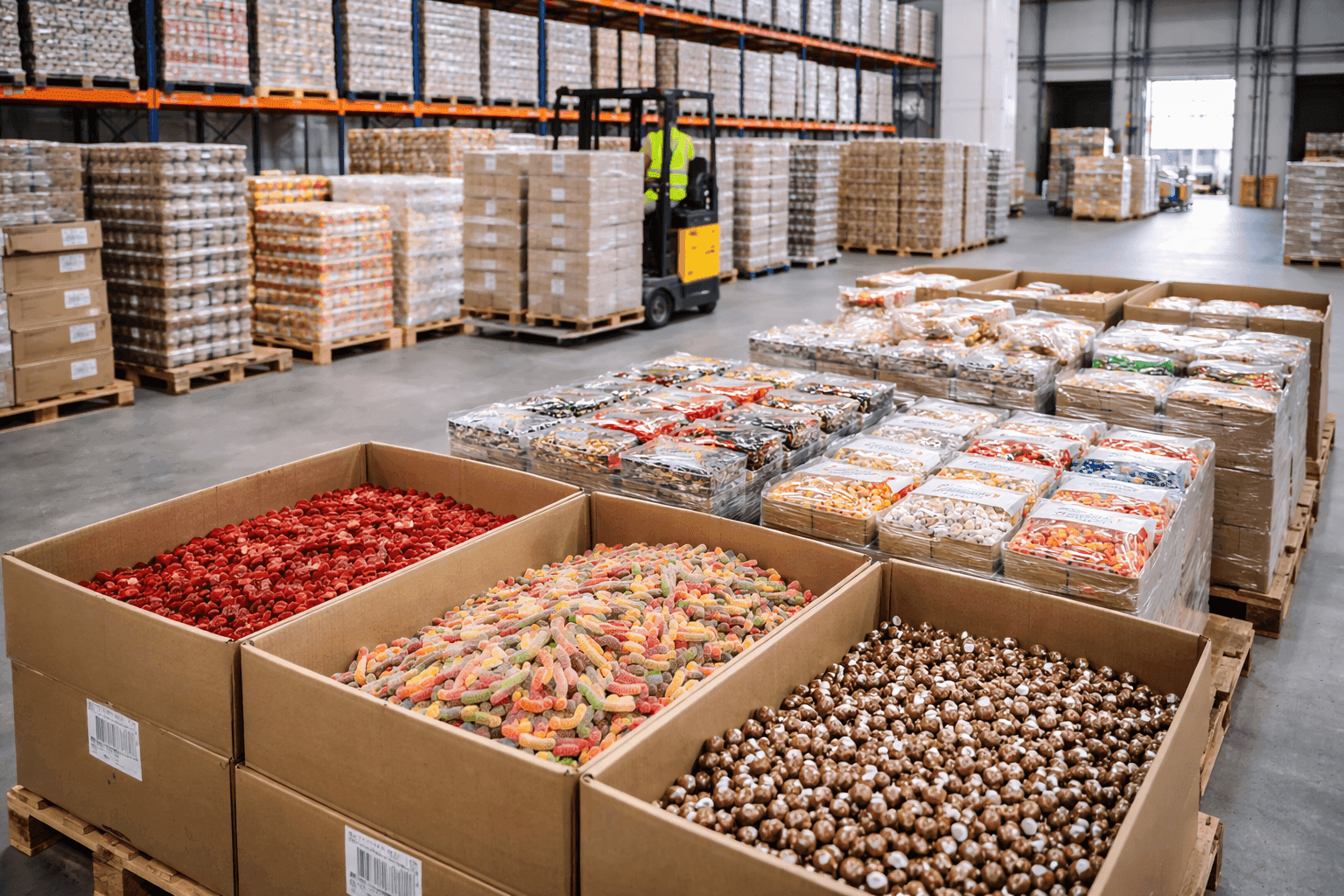
European confectionery benefits from several distinct advantages: high production standards, BRC and IFS-certified factories, a broad range of gummy, jelly, sour, and foam formats not widely available from Asian producers, strong consumer brand recognition particularly for Swedish and Nordic candy, and competitive pricing at scale through direct factory access. For retailers and distributors in Asia, the Middle East, North America, and Oceania, European candy offers genuine category differentiation compared to domestically produced alternatives.
Step 1: Define Your Format and Volume Requirements
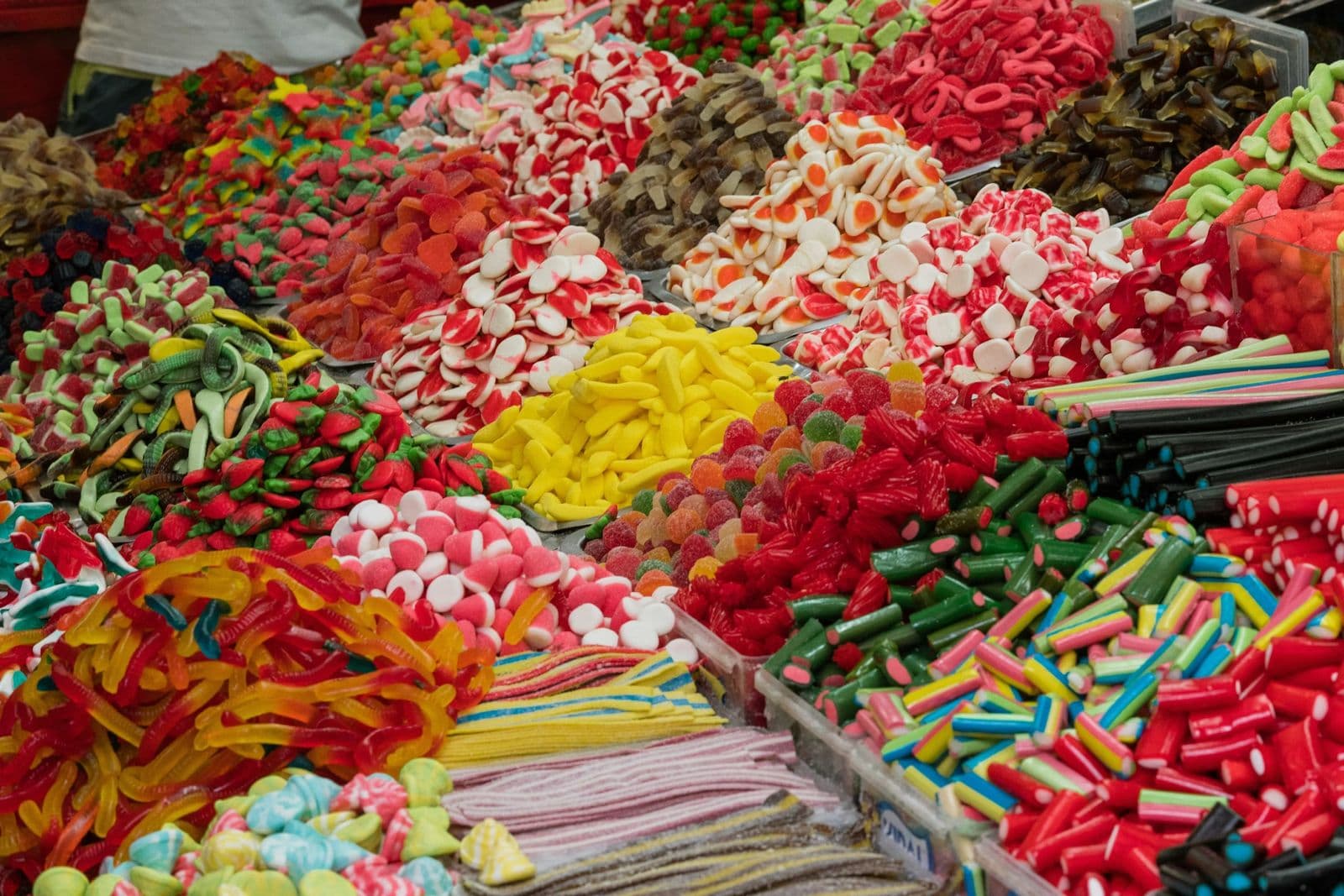
Before approaching suppliers, buyers should clearly define what they need: product format (gummy, jelly, sour, foam, liquorice), packaging type (bulk, pre-packed bags, pick & mix loose), weight and format specifications, target retail price point, required certifications (halal, vegan, organic, BRC), and estimated annual volume. Being specific about requirements allows suppliers to accurately assess whether they can meet your needs and provide meaningful pricing. Vague enquiries typically receive generic responses.
Step 2: Find the Right Supplier
European candy can be sourced through direct factory relationships or through trading companies that consolidate supply from multiple factories. Direct factory sourcing requires significant volume and the operational capacity to manage multiple supplier relationships. Trading companies like Candora Trading offer consolidated access to multiple factories under a single supply relationship, reducing complexity for buyers while maintaining cost efficiency. When evaluating suppliers, look for factory certifications (BRC, IFS, FSSC 22000), evidence of existing export experience, clear MOQ structures, and transparent pricing.
Step 3: Understand Certifications and Compliance
Key certifications for European candy export include BRC (British Retail Consortium) and IFS (International Featured Standards) for food safety, halal certification for Muslim-majority markets, vegan certification where required, and EU food safety compliance as a baseline standard. Buyers should request full technical documentation including certificates of analysis, factory audit reports, ingredient declarations, and allergen information. For markets with specific import registration requirements (Thailand FDA, Indonesian BPOM, Philippine FDA), technical documentation is essential for market entry.
Step 4: Logistics and Shipping
European candy is typically shipped by sea freight in 20-foot or 40-foot containers. Full container loads (FCL) are most cost-efficient for established supply relationships. Less-than-container loads (LCL) are viable for initial orders or buyers with lower volume requirements. Transit times vary by destination: 5-10 days to Turkey and the Middle East, 20-25 days to Southeast Asia, 25-35 days to Australia and New Zealand. Temperature-sensitive products may require refrigerated containers. Import duties vary significantly by destination country — buyers should confirm tariff rates with their customs broker before finalising supply agreements.
Step 5: Labelling and Market Entry Requirements
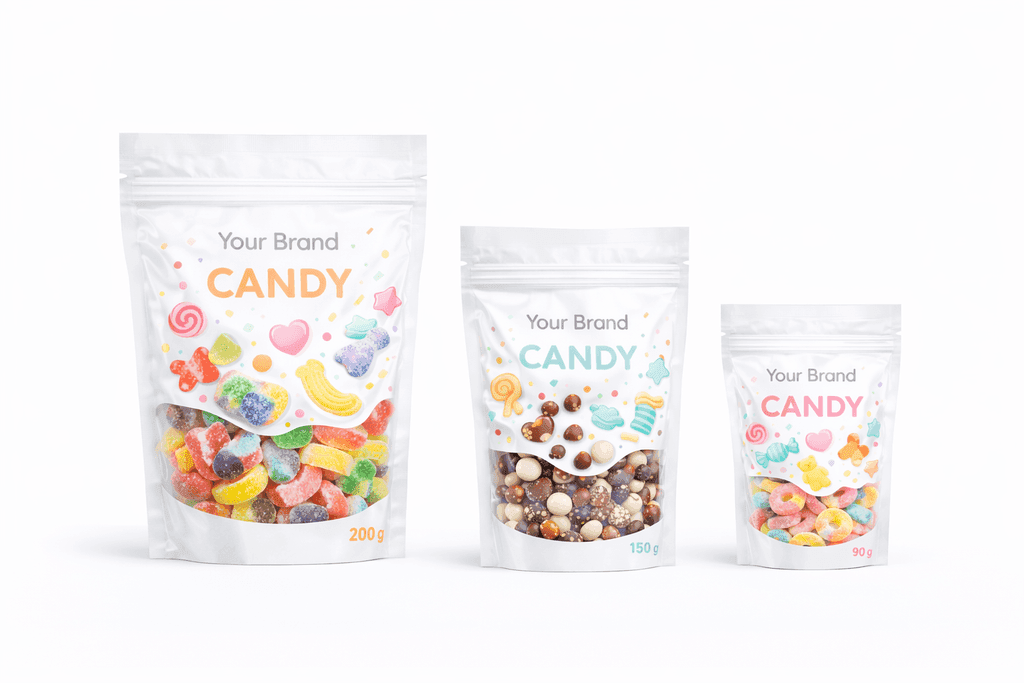
Most markets require local-language labelling on imported confectionery. EU-produced products carry EU-compliant labelling as standard, but buyers in non-EU markets typically need to add local-language stickers or arrange custom packaging with market-specific labelling. For private label programs, packaging can be produced with market-specific requirements built in from the start, eliminating the need for relabelling at destination. Buyers should confirm local labelling requirements with their regulatory advisor or customs broker before placing orders.
FAQ
Frequently asked questions
This varies by supplier and format. Candora Trading offers half-container programs for ready-packed products, making it accessible for buyers at all stages.
Typically 4-6 weeks including production, documentation, and transit — longer for custom private label.
Commercial invoice, packing list, bill of lading, certificate of origin, certificates of analysis, and any market-specific registration documentation.
Typically the buyer or their customs broker. Candora Trading provides all export documentation required for smooth customs clearance.
Ready to get started?
Contact our team to discuss volumes, pricing, and supply structures for your market.
Related
Explore more
Confectionery
Confectionery Wholesale
Regional
European Candy Supplier
Swedish Candy
Swedish Candy Wholesale: The Complete Guide for Retailers and Distributors
Wholesale
Duty Free Candy Supplier: European Confectionery for Travel Retail
Confectionery
Candy Manufacturer Partnership: Global Distribution for Confectionery Producers