Novelty & Specialty Candy Wholesale: Trend-Driven High Margins
Novelty candy (extreme flavors, limited editions, seasonal formats) drives 60-75% retail margins vs 40-50% commodity. Trend volatility (6-12 month shelf cycles) requires agile sourcing and inventory discipline. This guide covers novelty positioning, supplier selection, and seasonal strategy.
Novelty Candy Market: Margins vs Volatility Trade-Off
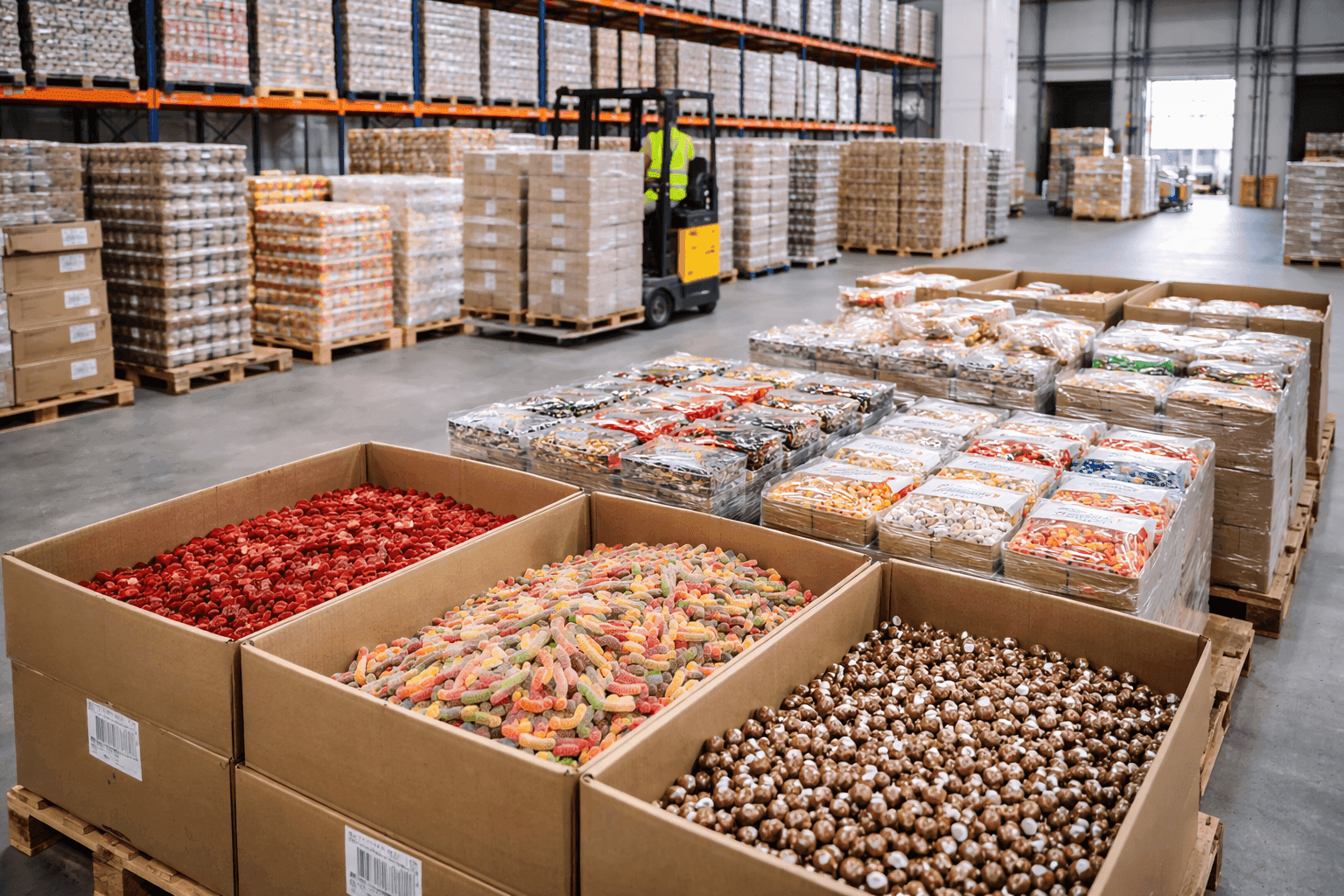
Novelty candy market: €500M-1B globally, 15-20% CAGR (faster than commodity). Characteristics: (1) limited edition formats (3-6 month production windows), (2) extreme flavors (ghost pepper, pickle, ramen-flavored candy), (3) designer/artisanal positioning, (4) high retail markup (60-75%), (5) trend velocity (viral for 3-6 months, then drops 60-80%). Cost: €0.25-0.50/unit (slightly higher than commodity due to special ingredients/production). Retail: €1.49-3.99 (positioning dependent). Margins: 60-75% gross. Challenge: inventory dead-stock risk (if trend fades, inventory ages). Mitigation: aggressive liquidation pricing, seasonal rotation (Halloween novelties rotate to Christmas formats), or food-bank donation (tax write-off).
Novelty Segments: Extreme Flavors, Limited Editions, Seasonal
Extreme flavors: ghost pepper gummies (€0.30-0.40 COGS, €2.49-3.99 retail), wasabi candy, pickle flavor (trendy 2023-2024). Limited editions: Halloween shapes (worms, spiders), Christmas themed, Valentine's Day. Seasonal: hot chocolate/candy (winter), ice pops (summer), harvest candies (autumn). Suppliers: Turkey (rapid prototyping, 4-6 week lead time, €0.25-0.40/unit), China (lowest cost, 6-8 weeks, €0.20-0.35/unit), Poland (mid-range, 5-7 weeks, €0.25-0.38/unit). MOQ: 2-5 tonnes per novelty format (low MOQ due to seasonal/limited nature). Strategy: 3-4 month orders for each novelty before trend peaks; accept 30-50% inventory markdown post-trend.
Positioning: 'Limited Edition' & Exclusivity Narrative
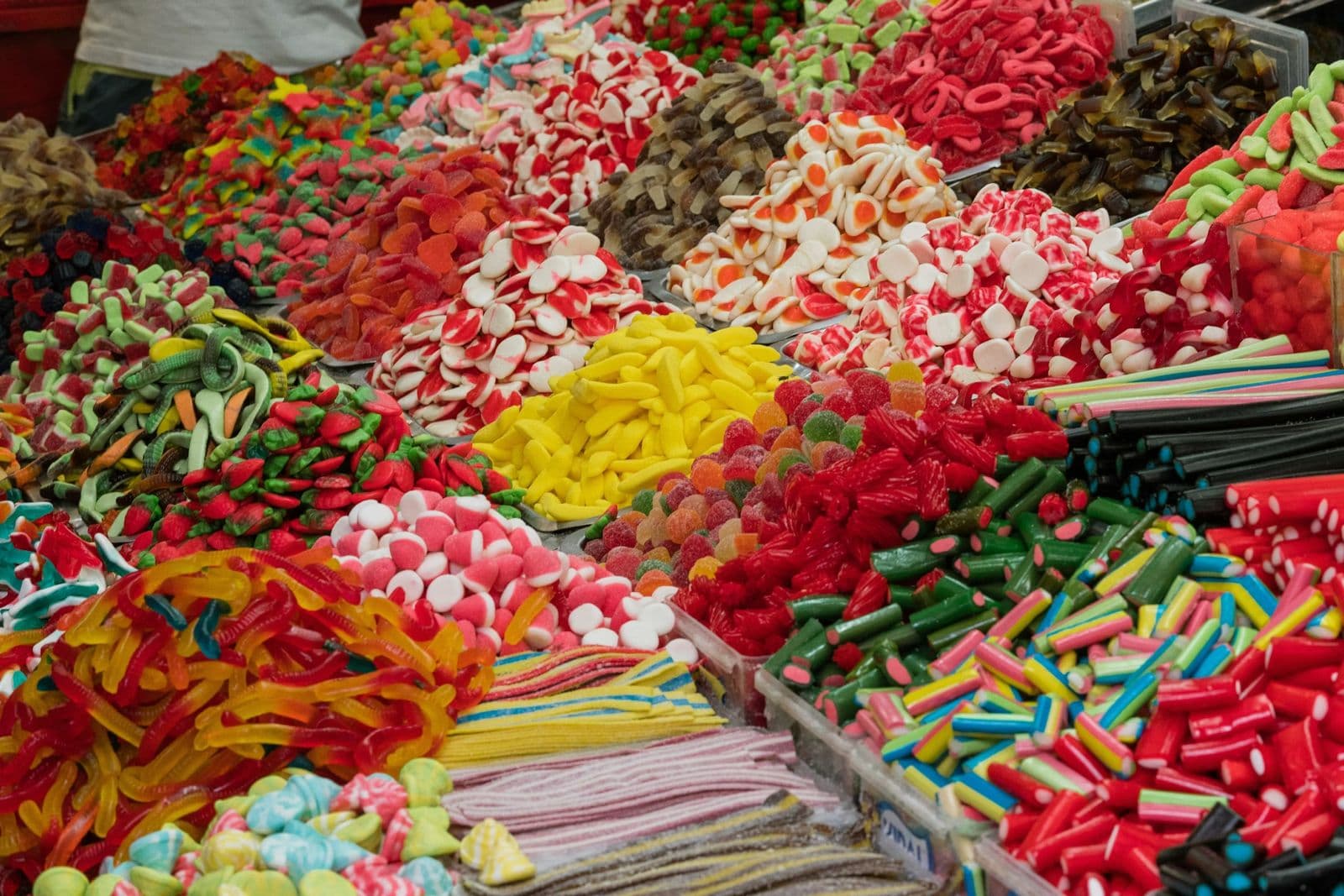
Novelty sells on story: 'Limited Edition,' 'Only 10K units produced,' 'Exclusive collaboration,' 'Trending on TikTok.' Packaging design critical: eye-catching (neon colors, unusual shapes), shareable (Instagram appeal), scarcity messaging ('Available while supplies last'). Retail positioning: premium shelf, eye-level placement, seasonal endcaps, online featured products. Pricing: novelty allows 2-4x commodity markup (€0.30 COGS → €1.99-3.99 retail vs €0.20 commodity → €0.99). Gross margin 65-75% vs 40-50% commodity. E-commerce advantage: novelty sells 30-50% faster online (viral TikTok/Instagram drives digital discovery vs brick-and-mortar shelf visibility).
Seasonal Strategy: Rotating Novelty Portfolio
Quarterly rotation: Q1 (Jan-Mar) = Valentine's/Easter novelties, Q2 (Apr-Jun) = summer ice/tropical, Q3 (Jul-Sep) = back-to-school/Halloween, Q4 (Oct-Dec) = Halloween/Christmas. Order 2-3 months ahead of season (April order for June delivery summer novelties, June for August Halloween, August for October Christmas). Seasonal peaks: Halloween +40-60% volume spike, Christmas +50-70%, Valentine's +20-30%. Forward-order 6-8 weeks to capture peak. Post-season liquidation: aggressive marking down (€0.49-0.79 vs €2.49-3.99 peak) or donate to food banks (€1 per unit tax write-off). Acceptable dead-stock: 10-20% of novelty inventory written off/donated annually (pricing into novelty ROI calculations).
Inventory Management: Avoiding Obsolescence
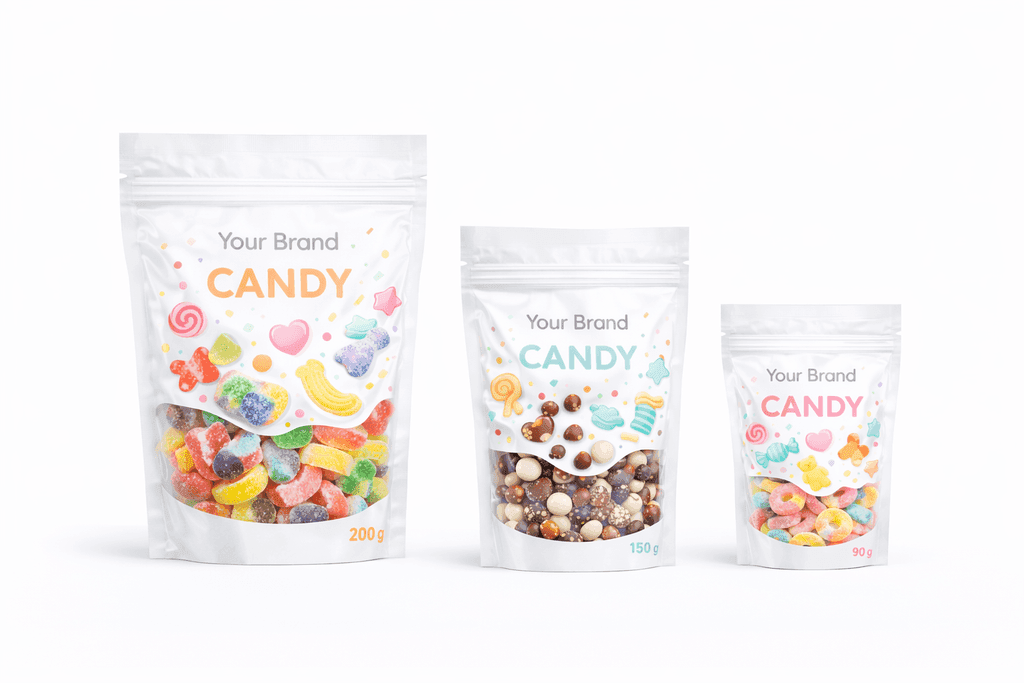
Novelty candy shelf-life: 12-18 months unopened, but retail velocity is 2-4 months peak. Inventory strategy: order for 4-6 month peak demand, accept 2-3 month post-trend decline. Example: Halloween novelty predicts 100K units peak month (Sept-Oct), order for 4-month supply (400K units). Month 1-2 peak: 60-70K/month sell-through. Month 3: normalized 20-30K/month. Month 4: liquidation 5-10K/month. By month 5-6, treat remaining 50-100K as dead stock: donate to food banks or extreme markdown (€0.49-0.79 vs €2.99 peak = 75-85% loss). Budget 10-20% inventory loss when forecasting novelty ROI. Mitigate by: (1) ordering conservatively (order for 4 months, not 6+), (2) liquidating aggressively post-trend (don't stretch declining sales period), (3) rotating to next seasonal novelty (Halloween remnants clear by Christmas push).
FAQ
Frequently asked questions
60-75% gross margin (€0.30-0.40 COGS → €1.99-3.99 retail). 2-3x commodity margins. However, 10-20% inventory dead-stock post-trend reduces net margin 40-50%.
2-3 months before seasonal peak. April order for June summer delivery, June for August Halloween, August for October Christmas. Suppliers offer 5-10% discount for off-season forward orders.
Aggressive post-season liquidation (€0.49-0.79 markdown, move inventory fast), food-bank donation (€1/unit tax write-off), or hold for next seasonal rotation (Easter eggs store through winter, resell spring). Acceptable loss: 10-20% of novelty inventory.
Ready to get started?
Contact our team to discuss volumes, pricing, and supply structures for your market.
Related
Explore more
Wholesale
Sour Candy Wholesale: Trending Format & TikTok-Driven Market
Wholesale
Gummy Candy Sourcing: Traditional, Functional & Novelty Segments
Wholesale
Candy Wholesale Margins: The Complete Profitability Guide for Retail Buyers
Wholesale
Container Sourcing Economics: Maximizing Direct Factory Discounts
Wholesale
Bulk Jelly Beans & Hard Candy Sourcing for High-Volume Retailers